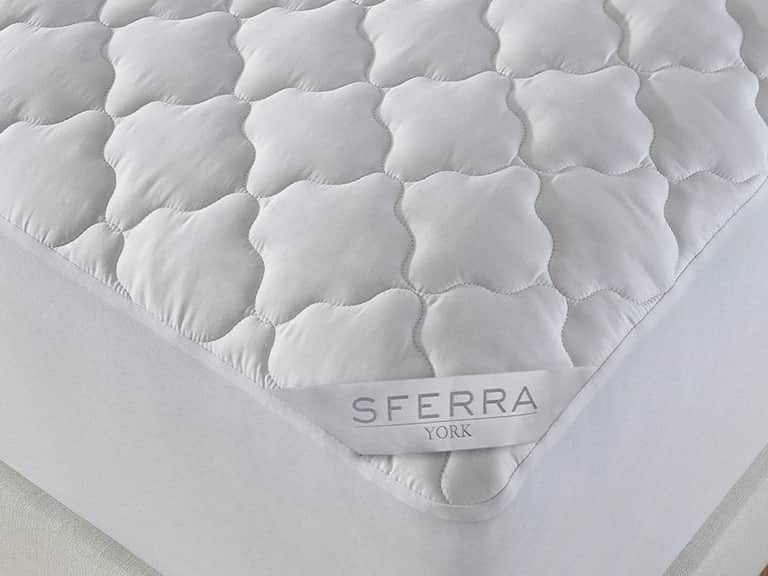
York Mattress Pad
Sleep cooler and comfier with loft that stays put, thanks to cotton fill and non-clumping design, plus a soft 300TC sateen surface for gentle skin feel and effortless care.
Explore the timeless allure of natural latex mattresses—where breathability, durability, and a touch of couture intersect. This guide expands on the science of latex, the subtle differences between Dunlop and Talalay, and a practical framework to help you select a bed that aligns with your sleep position, temperature preferences, and allergy considerations. Akin to a well-curated wardrobe, the right latex mattress should feel effortless, luxurious, and intrinsic to your daily well-being.
Natural latex mattresses are crafted from latex sap harvested from rubber trees. This sap is processed into two main forms: Dunlop and Talalay. Both are natural, renewable materials, and both offer distinct performance profiles that influence how a mattress feels and behaves across the night. The Sap-to-sleep journey begins with fresh latex being stabilized, poured into a mold, and then cured. The result is a mattress core that breathes, responds to movement, and maintains a resilient loft that can outlast many synthetic alternatives.
Breathability is the crown jewel of latex mattresses. The ability of latex to move air through the core reduces heat buildup and creates a more temperate sleeping surface. For hot sleepers, this is not a mere luxury; it’s a tangible factor that correlates with sleep quality, deep rest, and waking refreshed. Durability follows closely, as latex tends to resist body impressions over years of use, preserving contour and support without the sudden sag that plagues some foam-based systems.
At its core, natural latex is a testament to comfort without compromise. It delivers a combination of support and pressure relief that supports spinal alignment across different sleep positions, while offering an approachable sustainability narrative—organic or responsibly sourced materials pair with a design ethos that prioritizes long-term health and environmental stewardship.
Two dominant latex production methods shape the feel and performance of latex mattresses: Dunlop and Talalay. Dunlop latex delivers a denser, more supportive feel with robust contouring that can feel firmer, depending on formulation and layer arrangement. It tends to be slightly heavier and can provide excellent edge support, which is beneficial for couples seeking a stable perimeter when sharing a bed. Talalay latex, on the other hand, is typically lighter and plusher, noted for refined airiness and a more buoyant response. The microstructure of Talalay latex often yields a more uniform feel across the surface, delivering a plush initial conformity with steady resilience as you shift position during the night.
Consider how you move through the night. If you sleep on your side and crave gentle pressure relief without sinking, Talalay can offer that nuanced balance. If you sleep on your back or stomach and prefer a more buoyant, cradling support, Dunlop’s density may align better with your body. A layered construction—combining both Dunlop and Talalay in a single mattress—can harness the best of both worlds, delivering a customized feel that evolves with your sleep needs over time.
To distill choice into clarity, use a framework built around sleep position, temperature preferences, and allergy considerations. Answer these questions, then map your answers to model features and core materials.
Beyond feel, consider the overall mattress construction: the thickness and density of latex layers, the presence of a breathable cover, and the inclusion of pillow tops or zoned support layers. These elements influence not only comfort but also durability and ease of maintenance—an editor’s note to readers who prize both luxury and practicality.
Natural latex is inherently resilient, breathable, and durable. It provides reliable support that adapts to your body and movements, offering a harmonious balance between contour and lift. The material’s breathability helps regulate temperature, often yielding a cooler, more stable sleeping surface. For those who prioritise a non-toxic, long-lasting sleep foundation, latex sits at the intersection of luxury and health—an enduring commitment to quality.
Allergy considerations aside, a latex core can contribute to a cleaner sleeping environment when paired with appropriate covers and natural materials. The model you choose—Dunlop, Talalay, or a blend—will influence your comfort narrative, but the shared DNA is comfort without compromise, a chic stability that remains cool under pressure and glowingly fresh in the morning light.
Care for a natural latex mattress—whether a pure latex core or a blend with other materials—requires thoughtful but straightforward routines. Consider modest rotation (seasonal or quarterly) to promote even wear, use of a breathable, natural fabric cover, and adherence to manufacturer guidance for cleaning and rotation. A well-chosen protector protects your investment without compromising the breathability and feel that define latex.
Accessibility is essential: a well-designed latex mattress should read as an invitation to rest, not a barrier to entry. Choose layers that offer a clear comfort narrative, with measurable support zones and a cover that respects the senses—soft to the touch, yet resilient to wear. The goal is a surface that feels inherently luxurious while remaining easy to care for and durable enough to stand the test of time.
When evaluating latex options, prioritize a responsible supply chain, certifications on materials, and a cover that complements your room’s design language. The finest latex is not just about how it feels, but how it speaks to your daily rituals and health.